Friday, December 23, 2011

Cops Ready for War

Nestled amid plains so flat the locals joke you can watch your dog run away for miles, Fargo treasures its placid lifestyle, seldom pierced by the mayhem and violence common in other urban communities. North Dakota’s largest city has averaged fewer than two homicides a year since 2005, and there’s not been a single international terrorism prosecution in the last decade.
But that hasn’t stopped authorities in Fargo and its surrounding county from going on an $8 million buying spree to arm police officers with the sort of gear once reserved only for soldiers fighting foreign wars.
Every city squad car is equipped today with a military-style assault rifle, and officers can don Kevlar helmets able to withstand incoming fire from battlefield-grade ammunition. And for that epic confrontation—if it ever occurs—officers can now summon a new $256,643 armored truck, complete with a rotating turret. For now, though, the menacing truck is used mostly for training and appearances at the annual city picnic, where it’s been parked near the children’s bounce house.
“Most people are so fascinated by it, because nothing happens here,” says Carol Archbold, a Fargo resident and criminal justice professor at North Dakota State University. “There’s no terrorism here.”
Like Fargo, thousands of other local police departments nationwide have been amassing stockpiles of military-style equipment in the name of homeland security, aided by more than $34 billion in federal grants since the Sept. 11, 2001, terrorist attacks, a Daily Beast investigation conducted by the Center for Investigative Reporting has found.
Interactive Map: States Spend Billions on Homeland Security
The buying spree has transformed local police departments into small, army-like forces, and put intimidating equipment into the hands of civilian officers. And that is raising questions about whether the strategy has gone too far, creating a culture and capability that jeopardizes public safety and civil rights while creating an expensive false sense of security.
“The argument for up-armoring is always based on the least likely of terrorist scenarios,” says Mark Randol, a former terrorism expert at the Congressional Research Service, the nonpartisan research arm of Congress. “Anyone can get a gun and shoot up stuff. No amount of SWAT equipment can stop that.”
Local police bristle at the suggestion that they’ve become “militarized,” arguing the upgrade in firepower and other equipment is necessary to combat criminals with more lethal capabilities. They point to the 1997 Los Angeles-area bank robbers who pinned police for hours with assault weapons, the gun-wielding student who perpetrated the Virginia Tech massacre in 2007, and the terrorists who waged a bloody rampage in Mumbai, India, that left 164 people dead and 300 wounded in 2008.
The new weaponry and battle gear, they insist, helps save lives in the face of such threats. “I don’t see us as militarizing police; I see us as keeping abreast with society,” former Los Angeles Police chief William Bratton says. “And we are a gun-crazy society.”
Adds Fargo Police Lt. Ross Renner, who commands the regional SWAT team: “It’s foolish to not be cognizant of the threats out there, whether it’s New York, Los Angeles, or Fargo. Our residents have the right to be protected. We don’t have everyday threats here when it comes to terrorism, but we are asked to be prepared.”
The skepticism about the Homeland spending spree is less severe for Washington, D.C., Los Angeles and New York, which are presumed to be likelier targets. But questions persist about whether money was handed out elsewhere with any regard for risk assessment or need. And the gap in accounting for the decade-long spending spree is undeniable. The U.S. Homeland Security Department says it doesn’t closely track what’s been bought with its tax dollars or how the equipment is used. State and local governments don’t maintain uniform records either.
To assess the changes in law enforcement for The Daily Beast, the Center for Investigative Reporting conducted interviews and reviewed grant spending records obtained through open records requests in 41 states. The probe found stockpiles of weaponry and military-style protective equipment worthy of a defense contractor’s sales catalog.
In Montgomery County, Texas, the sheriff’s department owns a $300,000 pilotless surveillance drone, like those used to hunt down al Qaeda terrorists in the remote tribal regions of Pakistan and Afghanistan. In Augusta, Maine, with fewer than 20,000 people and where an officer hasn’t died from gunfire in the line of duty in more than 125 years, police bought eight $1,500 tactical vests. Police in Des Moines, Iowa, bought two $180,000 bomb-disarming robots, while an Arizona sheriff is now the proud owner of a surplus Army tank.
The flood of money opened to local police after 9/11, but slowed slightly in recent years. Still, the Department of Homeland Security awarded more than $2 billion in grants to local police in 2011, and President Obama’s 2009 American Recovery and Reinvestment Act contributed an additional half-billion dollars.
Law enforcement officials say the armored vehicles, assault weapons, and combat uniforms used by their officers provide a public safety benefit beyond their advertised capabilities, creating a sort of “shock and awe” experience they hope will encourage suspects to surrender more quickly.
“The only time I hear the complaint of ‘God, you guys look scary’ is if the incident turns out to be nothing,” says West Hartford, Conn., Police Lt. Jeremy Clark, who organizes an annual SWAT competition.
A grainy YouTube video from one of Clark’s recent competitions shows just how far the police transformation has come, displaying officers in battle fatigues, helmets, and multi-pocketed vests storming a hostile scene. One with a pistol strapped to his hip swings a battering ram into a door. A colleague lobs a flash-bang grenade into a field. Another officer, holding a pistol and wearing a rifle strapped to his back, peeks cautiously inside a bus.
The images unfold to the pulsing, ominous soundtrack of a popular videogame, Call of Duty: Modern Warfare 2. Though resembling soldiers in a far-flung war zone, the stars of this video are Massachusetts State Police troopers.
The number of SWAT teams participating in Clark’s event doubled to 40 between 2004 and 2009 as Homeland’s police funding swelled. The competition provides real-life scenarios for training, and Clark believes it is essential, because he fears many SWAT teams are falling below the 16 hours of minimum monthly training recommended by the National Tactical Officers Association.
“Luck is not for cops. Luck is for drunks and fools,” Clark said, explaining his devotion to training.

One beneficiary of Homeland’s largesse are military contractors, who have found a new market for their wares and sponsor training events like the one Clark oversees in Connecticut or a similar Urban Shield event held in California.
Special ops supplier Blackhawk Industries, founded by a former Navy SEAL, was among several Urban Shield sponsors this year. Other sponsors for such training peddle wares like ThunderSledge breaching tools for smashing open locked or chained doors, Lenco Armored Vehicles bulletproof box trucks, and KDH Defense Systems’s body armor.

“As criminal organizations are increasingly armed with military-style weapons, law enforcement operations require the same level of field-tested and combat-proven protection used by soldiers and Marines in Iraq, Afghanistan, and other high-risk locations,” boasts an Oshkosh Corp. brochure at a recent police seminar, where the company pitched its “tactical protector vehicle.”
The trend shows no sign of abating. The homeland security market for state and local agencies is projected to reach $19.2 billion by 2014, up from an estimated $15.8 billion in fiscal 2009, according to the Homeland Security Research Corp.
The rise of equipment purchases has paralleled an apparent increase in local SWAT teams, but reliable numbers are hard to come by. The National Tactical Officers Association, which provides training and develops SWAT standards, says it currently has about 1,650 team memberships, up from 1,026 in 2000.
Many of America’s newly armed officers are ex-military veterans from the front lines of Iraq and Afghanistan. Charles Ramsey, who was police chief in Washington, D.C., on 9/11, upgraded the weaponry when he moved to Philadelphia in 2008. Today, some 1,500 Philly beat cops are trained to use AR-15 assault rifles.
“We have a lot of people here, like most departments, who are ex-military,” Ramsey says. “Some people are very much into guns and so forth. So it wasn’t hard to find volunteers.”
Some real-life episodes, however, are sparking a debate about whether all that gear also creates a more militarized mind-set for local police that exceeds their mission or risks public safety.

In one case, dozens of officers in combat-style gear raided a youth rave in Utah as a police helicopter buzzed overhead. An online video shows the battle-ready team wearing masks and brandishing rifles as they holler for the music to be shut off and pin partygoers to the ground.
And Arizona tactical officers this year sprayed the home of ex-Marine Jose Guerena with gunfire as he stood in a hallway with a rifle that he did not fire. He was hit 22 times and died. Police had targeted the man’s older brother in a narcotics-trafficking probe, but nothing illegal was found in the younger Guerena’s home, and no related arrests had been made months after the raid.
In Maryland, officials finally began collecting data on tactical raids after police in 2008 burst into the home of a local mayor and killed his two dogs in a case in which the mayor’s home was used as a dropoff for drug deal. The mayor’s family had nothing to do with criminal activity.
Such episodes and the sheer magnitude of the expenditures over the last decade raise legitimate questions about whether taxpayers have gotten their money’s worth and whether police might have assumed more might and capability than is necessary for civilian forces.
“With local law enforcement, their mission is to solve crimes after they’ve happened, and to ensure that people’s constitutional rights are protected in the process,” says Jesselyn McCurdy, senior legislative counsel for the American Civil Liberties Union. “The military obviously has a mission where they are fighting an enemy. When you use military tactics in the context of law enforcement, the missions don’t match, and that’s when you see trouble with the overmilitarization of police.”
The upgrading of local police nonetheless continues. Arizona Sheriff Joe Arpaio now claims to operate his own air armada of private pilots—dubbed Operation Desert Sky—to monitor illegal border crossings, and he recently added a full-size surplus Army tank. New York Police Commissioner Ray Kelly boasted this fall he had a secret capability to shoot down an airliner if one threatened the city again. And the city of Ogden, Utah, is launching a 54-foot, remote-controlled “crime-fighting blimp” with a powerful surveillance camera.
Back in Fargo, nearby corn and soybean farmer Tim Kozojed supports the local police but questions whether the Homeland grants have been spent wisely. ”I’m very reluctant to get anxious about a terrorist attack in North Dakota,” Kozojed, 31, said. “Why would they bother?”    Source

A Multiverse of Exploration: The Future of Science 2021


Invisibility cloaks. The search for extraterrestrial intelligence. A Facebook for genes. These were just a few of the startling topics IFTF explored at our recent Technology Horizons Program conference on the "Future of Science." More than a dozen scientists from UC Berkeley, Stanford, UC Santa Cruz, Scripps Research Institute, SETI, and private industry shared their edgiest research driving transformations in science. MythBusters' Adam Savage weighed in on the future of science education. All of their presentations were signals supporting IFTF's new "Future of Science" forecast, laid out in a new map titled "A Multiverse of Exploration: The Future of Science 2021." The map focuses on six big stories of science that will play out over the next decade: Decrypting the Brain, Hacking Space, Massively Multiplayer Data, Sea the Future, Strange Matter, and Engineered Evolution. Those stories are emerging from a new ecology of science shifting toward openness, collaboration, reuse, and increased citizen engagement in
scientific research.
We are delighted to share the map with you, under a Creative Commons license permitting non-commercial sharing with attribution. We hope you enjoy it and find it provocative. Think of "A Multiverse of Exploration: The Future of Science 2021" as a star chart of possibility, pointing the way toward opportunities for wonder, knowledge, and insight. Use it to raise questions about how your life and work may change in light of the startling transformations that science may bring about in the next ten years. Indeed, every forecast could be rephrased as a "what if" question. What if you could record your dreams? What if you could design a life form? What if you could launch a company in orbit? Your answers to those questions can help inform decisions in the present. Inside this map, you'll find plenty of space to think.

Thursday, December 22, 2011

Ashke-Nazi


Ashkenazi = (Ashke =Flame, Nazi = Knight) = Knights of the Flame = Illuminati

In the 14th Century, descendants of Yariel (Nasi)-Bayan the 1st Grand Prince of the Bulgar and Avar formed the Ottoman Empire under Kaiser Osman I (1258-1326) under Islam.

 At the beginning of the 17th Century, Ibrahim I, descendent of Kaiser Osman I and Yariel (Nasi)-Bayan the 1st Grand Prince of the Bulgar and Avar commissioned the occult scholar
Nethaniel (Nathan) of Gaza and his scriptorium to restore a pure version of the original Ba’al worship of their ancestors many centuries before.

The religion created by Nethaniel (Nathan) of Gaza for Ibrahim I is variously called Sabbateanism and Ashkenazism (meaning “the illuminated knights” or “the illuminati”) with Ibrahim I declaring himself “messiah”.

Grand Vizier Kara Mustafa Pasha of Mehmed IV forces deposed Ibrahim I to swear allegiance to Islam in 1666 as attempt to stop it.

Despite all attempts to stamp out Ashkenazism (Sabbateanism) amongst the Bulgar, Avar, Magyar and Rusar, huge numbers of Khazarian descendents convert to this new extreme apocalyptic messianic Cult.

By the 20th Century, the Magyar of Venice now devoted followers of Sabbateanism succeeded in wiping out the leading royal descendents of the Bulgar and Avar families and ancient Menesheh followers with largely only extremist Ashkenazi followers of the Ottoman (quasi-Islamic) religion remaining.

In the middle of the 20th Century, the Magyar of Venice as dedicated followers of Sabbateanism choose to destroy the ancient covenant (Contract with Satan) of the talmudic Menesheh, by concocting a scheme to fullfill the talmudic apocalyptic prophecy, by burning "6" (Not 6 million) Menesheh in a burnt offering to Ba'al/Satan and bringing home the 13 tribes of the Menesheh to Palistine/Israel

These are the elite jew pigs running the world today.

To be continued...

Sunday, December 18, 2011

Do You Own Your Children?

Do you know who owns your child?

This might seem like a strange question to most… but the answer is even stranger and more terrifying to comprehend.

When a question like this is posed, we the people often look to our legislature and our constitution for the answers, as esoteric and interpretable as those answers may be. But without the rose-colored glasses, we can actually read with our own eyes what the answer to this question is from the eyes and opinion of our government.

Before you can truly attain the answer to this question though, and comprehend how it applies to you and your children, you must first temporarily suspend your emotion, your idealism, and your beliefs. For when we refer to law, these things do not apply. And when it is a corporation that writes these laws, morals, ethics, and values go out the window.

Anger though, for the purpose of the information you are about to receive, is permitted and requested…


First of all, let’s clarify that what we are about to see is the opinion of the court system. Courts do not offer “judgment”, only “opinion”. The justices (not judges) of the “Supreme Court” as well offer nothing but opinion, which then becomes what the BAR association considers to be “Public Policy” or public opinion. The BAR copyrights these opinions then misleadingly calls it the “law”.

The side effect of being a consenting citizen of the United States (corporation) is that these copyrighted codes are applied to you with what the U.S.CODE itself calls Prima Facie law (law which derives its authority from presumed consent). Therefore, all branches of government technically operate under presumed law, meaning that the consent of the governed is automatically assumed in all legal matters and decisions based on court opinion.

This, unfortunately, applies to all contracts made with or on behalf of the state…

And one of those contracts is called a “Marriage License“.

Yours and your spouses signature on that state-sanctioned and federally registered document signifies a consent-based contract between all three parties – you, your spouse, and the “State“.

But don’t take my word for it… Let’s see what the court system offers in their opinion about this subject?

First, lets visit an Illinois Appellate Court judgment from 1997:

Appellate Court of Illinois, NO. 5-97-0108:

“Marriage is a civil contract to which there are three parties-the husband, the wife and the state.“

Van Koten v. Van Koten. 154 N.E. 146.

Continued…

“…When two people decide to get married, they are required to first procure a license from the State. If they have children of this marriage, they are required by the State to submit their children to certain things, such as school attendance and vaccinations. Furthermore, if at some time in the future the couple decides the marriage is not working, they must petition the State for a divorce. Marriage is a three-party contract between the man, the woman, and the State“

Linneman v. Linneman, 1 Ill. App. 2d 48, 50, 116 N.E.2d 182, 183 (1953), citing Van Koten v. Van Koten, 323 Ill. 323, 326, 154 N.E. 146 (1926).

“The State represents the public interest in the institution of marriage.“

Linneman, 1 Ill. App. 2d at 50, 116 N.E.2d at 183 (1953).

Continued…

“This public interest is what allows the State to intervene in certain situations to protect the interests of members of the family.   The State is like a silent partner in the family who is not active in the everyday running of the family but becomes active and exercises its power and authority only when necessary to protect some important interest of family life.   Taking all of this into consideration, the question no longer is whether the State has an interest or place in disputes such as the one at bar, but it becomes a question of timing and necessity.“

Also, this case law states…

“The state has a wide range of power for limiting parental freedom and authority in things affecting the child’s welfare… In fact, the entire familial relationship involves the State.”

Prince, 321 U.S. at 167, 64 S.Ct. at 442, 88 L.Ed. 645.

(SOURCE: http://caselaw.findlaw.com/il-court-of-appeals/1486817.html)


Well now… the courts sure do seem to offer the opinion that your child is owned by the state!

But heck, what should we the people (not People) expect?

When such authority and jurisdiction is just arbitrarily handed over to a bunch of attorneys running around in black moo-moos with little wooden hammers yelling that they rule supreme in their houses of judicial worship simply because the state allows them to presume such authority and jurisdiction… I suppose those people who consent to this charade get just what they deserve – slavery through a bondage contract.

But then, when the President of the country is also a lawyer, along with his wife, and for that mater more than half of all U.S. Presidents, 56/100 Senators, over 35% of Congressmen, both “speakers” of the house, and most of the State Governors in office today are all BAR attorneys/lawyers, I suppose we shouldn’t be at all surprised that the opinion of the BAR Association is the law of the land…

Of course, the above opinion is not just some isolated case. This opinion is quite general in its purview, and quite common in its legal application. In fact, it is the very basis of the criminal racket we call the dreaded “Child Protective Services (CPS)”, which claims its overarching authority from the Federal “Health And Human Services (HHS)” as it legally kidnaps your children.

So where else can we find such blatant power abused so absolutely?

How about in the case of MEADOWS v. MEADOWS, (Aug 2008), in the “Court of Civil Appeals of Alabama”?

“The primary control and custody of infants is with the government.”

Tillman V. Roberts. 108 So. 62

“There is no wider area for the exercise of judicial discretion than that of providing for and protecting the best interests of children.“

Ex parte Handley, 460 So.2d 167 (Ala.1984).

“The court stands in the position of parens patria[e] of children.“

Ayers v. Kelley, 284 Ala. 321, 224 So.2d 673 (1969)․

“…we held that the best interest of the child took precedence over the parent’s right to travel.“

Everett, 660 So.2d at 601-02.

“In 1984, the Court of Appeals of Idaho ruled that the State had a ‘compelling governmental interest’ that justified restricting the residence of the custodial parent, holding that the best interests of a child had priority over the parent’s right to travel.“

Ziegler v. Ziegler, 107 Idaho 527, 691 P.2d 773 (Idaho App.1985) (citing Carlson v. Carlson, 8 Kan.App.2d 564, 661 P.2d 833 (1983)).

**Note: The word “interest”, when it is used by the courts on behalf of “the state”, should be considered here to be defined in layman’s terms as the monetary interest in what the State considers one of its trade-able commodities. For to a for-profit government, people are considered legal “persons”, and their value is not in flesh and blood, but in labor and tax. Persons are the original form of legal tender. -Clint-

Continued…

“Parens patriae,” literally “parent of the country,” refers traditionally to role of state as sovereign and guardian of persons under legal disability.”

Ex parte Bayliss, 550 So.2d 986, 988 n. 1 (Ala.1989) (quoting Black’s Law Dictionary 1003 (5th ed.1979)).

“Pursuant to the parens patriae doctrine, ‘the primary control and custody of infants is with the government, to be delegated, as of course, to their natural guardians and protectors, so long as such guardians are suitable persons to exercise it.’ ”

Ex parte Wright, 225 Ala. 220, 222, 142 So. 672, 674 (1932). See also Fletcher v. Preston, 226 Ala. 665, 148 So. 137 (1933); and Striplin v. Ware, 36 Ala. 87 (1860).

“In other words, the state is the father and mother of the child and the natural parents are not entitled to custody, except upon the state’s beneficent recognition that natural parents presumably will be the best of its citizens to delegate its custodial powers… ‘The law devolves the custody of infant children upon their parents, not so much upon the ground of natural right in the latter, as because the interests of the children, and the good of the public, will, as a general rule, be thereby promoted.’ “

Chandler v. Whatley, 238 Ala. 206, 208, 189 So. 751, 753 (1939) (quoting Striplin v. Ware, 36 Ala. at 89) (‘ ’).

(SOURCE: http://caselaw.findlaw.com/al-court-of-civil-appeals/1325717.html)


Wait a minute, you say. This doesn’t sound very “constitutional” to me…

Oh, you mean that mythical and more importantly interpretable (in court opinion) document that you believe gives you rights? Silly rabbits, tricks are for kids.

In reality, everything that happens is in fact “constitutional” as long as the court (an attorney in a black moo-moo) says it is “constitutional” from within its (his/her) opinion.

In the end, you have only one right. And that right is the right of non-consent. (Consent is the most important legal term that you can possibly ever comprehend.)

But don’t take my word for it… here are a few more instances of “case law” which let you know that the constitution simply does not apply to you in the corporate world of commercial (copyrighted) code…

“But, indeed, no private person has a right to complain, by suit in court, on the ground of a breach of the Constitution. The Constitution it is true, is a compact, but he is not a party to it.“

Padelford, Fay & Co., vs. Mayor and Aldermen of the City of Savannah 14 Ga. 438, 520

**Note: Remember, the word “person” refers to your veil of artificial person-hood; your STRAWMAN if you will. The court will never refer to you in the sense that you are a living, breathing, sentient being with god-given rights that cannot be taken away, but instead relies on your presumed consent as the physical representation of your fiction, your corporate self. “Person” is defined in U.S. CODE as an “individual, association, corporation, group…” etc. It is not defined as “people” unless those people are a group of “persons”, in which case, as in the constitution, the word “people” is capitalized (i.e. We, the People – referring to the men who signed the constitution, and whom were the only men for which that constitution held under “contract” with any authority. The constitution has no authority accept that for which the court passes judgment (opinion) upon. -Clint-

“The people of the United States resident within any State are subject to two Governments: one State, and the other National; but there need be no conflict between the two. The powers which one possesses, the other does not. They are established for different purposes, and have separate jurisdictions. Together they make one whole, and furnish the people of the United States with a complete government, ample for the protection of all their rights at home and abroad. True, it may sometimes happen that a person is amenable to both jurisdictions for one and the same act… It is the natural consequence of a citizenship which owes allegiance to two sovereignties, and claims protection from both. The citizen cannot complain, because he has voluntarily submitted himself to such a form of government.“

The Supreme Court, 92 US 551: “U.S. v Cruikshank”

Well, there you have it!

Even as the Supreme Court – which has mistakenly translated the word “supreme” to mean that these seven appointed “justices” who pass “opinion” upon the masses of consenting “citizens” are more supreme than even God himself – these men and women; who are not voted into these positions of power in any way by the people, but instead are appointed by the President of the United States (corporation)… these self-imposed deities clearly state here that they are the law of the land, and that that “the natural consequence of citizenship” is for the people to be under their supreme opinion!

Well I for one do not voluntarily submit to the opinions of these megalomaniacs any longer.

And for the record, as a free man with God as my witness…

I DO NOT CONSENT!!!

FYI… Stay tuned, subscribe, or do what ever you need to do to monitor future postings from my blog – for there are BIG things happening and lots of important information coming to you soon, free of charge, from yours truly and my band of merry men.

Stay tuned…

Special thanks to Burt for all that he does to open my eyes. Please visit his YouTube page here:

http://www.youtube.com/user/donotconsent83?ob=video-mustangbase

And keep this future website in your bookmarks, of which I very much plan to be a part of:

onlyfreemen.com

–Clint Richardson (realitybloger.wordpress.com)
–Friday, December 16, 2011

Crushing the Disinformation Surrounding Indefinite Detention of Americans Under the NDAA

Today Glenn Greenwald, writing for Salon, published a piece which is required reading for anyone who has been keeping up with the National Defense Authorization Act (NDAA) Fiscal Year 2012, especially those of us who have been arguing with proponents of the bill and others who do not understand the detainee provisions therein.

 I will be going over Greenwald’s points in this article, as they cannot be emphasized enough and are all based in the ugly reality we see unfolding before us, unlike the claims made by those contending that the bill does not allow indefinite detention of American citizens without charge or trial.
The indefinite detention sections, contained within the NDAA along with other strange sections like removing the ban on bestiality and sodomy for members of the armed forces, and Obama’s support for it has drawn intense criticism from some somewhat unlikely sources.

For instance, Human Rights Watch called Obama’s refusal to veto the detainee bill “a historic tragedy for rights,” and characterized the NDAA as “ill-conceived.”
Similarly, the American Civil Liberties Union (ACLU) criticized Obama for backing down on his veto threat, although as I have previously outlined, it wouldn’t really make a difference even if he did veto it.

If Obama actually followed through and vetoed the bill, the veto could simply be overridden by both chambers and they have far more than the 2/3majority required to override a Presidential veto.

“If President Obama signs this bill, it will damage both his legacy and American’s reputation for upholding the rule of law. The last time Congress passed indefinite detention legislation was during the McCarthy era and President Truman had the courage to veto that bill.

We hope that the president will consider the long view of history before codifying indefinite detention without charge or trial,” said the director of the ACLU’s Washington Legislative Office, Laura Murphy.

Even the New York Times – hardly a publication known for criticizing the Obama administration and Democrats in general – published a heated editorial in which it is written that Obama’s decision to back down on the hollow veto threat “reinforces the impression of a fumbling presidency.”

The editorial rightly points out, “To start with, this bill was utterly unnecessary.

Civilian prosecutors and federal courts have jailed hundreds of convicted terrorists, while the tribunals have convicted a half-dozen.”

There are some disturbingly prevalent myths about the NDAA that I see crop up in emails and in the comment section on End the Lie and other places that post my articles, all of which Greenwald strikes down with apparent ease.

The main three falsehoods I see parroted are: “The NDAA doesn’t actually codify indefinite detention”; “The NDAA doesn’t widen the definition of what the ‘War on Terror’ is as was previously outlined in the 2001 Authorization for Use of Military Force (AUMF)”; and “American citizens cannot be detained indefinitely under the NDAA.”

All of these are demonstrably untrue, as I will show in language that anyone can understand. If, after reading this, you still do not understand that we are all in danger of being locked up indefinitely without charge or trial under this bill, please do not hesitate to contact me and substantiate your position.

To first address the codification of indefinite detention, we look to the conference report which accompanied H.R. 1540, specifically the section on detainee provisions, found here.

On page three of the PDF, under Subtitle D – Counterterrorism, Section 1021, which is page 654 of the original document, we read starting on line 19, “The disposition of a person under the law of war as described in subsection (a) may include the following: (1) Detention under the law of war without trial until the end of the hostilities authorized by the Authorization for Use of Military Force.”

How any sane individual could read, “Detention under the law of war without trial until the end of the hostilities,” and think that this does not explicitly codify indefinite detention is beyond comprehension.

I’m not sure how they could possibly put it in a more blatant fashion. There is absolutely no arguing that this allows for indefinite detention “until the end of the hostilities” which will likely never happen, as perpetual conflict is what the entire “War on Terror” is about.

“Anyone claiming this bill does not codify indefinite detention should be forced to explain how they can claim that in light of this crystal clear provision,” Greenwald rightly contends.

I would love to see someone argue this and if you’re that person, please do not hesitate to email me. I very well might publish your rebuttal and my response, if you agree to it.

Greenwald aptly points out that both the Obama and Bush regimes have repeatedly argued that the 2001 AUMF tacitly gives them the power to indefinitely detain and quite unfortunately, “post-9/11 deferential courts have largely accepted that view.”

These precedents allow the language to be inserted in the NDAA that says that nothing in the NDAA will expand the 2001 AUMF, which is what proponents often point to in defense of their position that it will not be used to indefinitely detain American citizens without charge or trial.

In reality, the interpretations used by the Executive branch and the so-called justice system are “already so much broader than its language provides,” according to Greenwald.

This is exactly the same as the so-called “secret PATRIOT Act” which was exposed by Senator Ron Wyden in late May of this year.

This is not truly a secret PATRIOT Act, but instead is a classified interpretation of the law which “cannot be publicly assessed or challenged,” according to Wired.

What makes proponents of the NDAA think that the government will suddenly change course and begin to interpret the law in a straight-forward manner which we can all understand and scrutinize?

I contend that it is naïve, if not outright ignorant, to believe that the NDAA’s interpretation – specifically the detainee provisions – will be interpreted in our favor.

There is simply no indication that this is the case and it would buck the disturbing trend established by the government of the United States of establishing laws and interpreting them in ways which we are not aware of.

The important fact to take home is that this is the first time that indefinite detention has been explicitly codified in a statute since the Internal Security Act of 1950 during the McCarthy “red scare” era.

The next myth is that the NDAA does not expand the definition of the “War on Terror” as previously outlined in the 2001 AUMF and like the other fallacies surrounding this bill, it is easily proven to be false.

Under the 2001 AUMF, the scope of the so-called War on Terror was much smaller than what is outlined in the NDAA and it was much more restricted in who it authorized the use of force on.

Under Section 2 of the 2001 AUMF we read,
“(a) IN GENERAL- That the President is authorized to use all necessary and appropriate force against those nations, organizations, or persons he determines planned, authorized, committed, or aided the terrorist attacks that occurred on September 11, 2001, or harbored such organizations or persons, in order to prevent any future acts of international terrorism against the United States by such nations, organizations or persons.”

As you can see, the authorization is relatively quite limited compared to the new language which, on top of the guidelines in the AUMF, adds, “(2) A person who was a part of or substantially supported al-Qaeda, the Taliban, or associated forces that are engaged in hostilities against the United States or its coalition partners, including any person who has committed a belligerent act or has directly supported such hostilities in aid of such enemy forces.”

The glaring part of this section is that it is wildly ambiguous and leaves the door open to lump a wide range of people under the label of “covered persons” which were previously not (at least explicitly) covered by the AUMF.

A major issue here is that the Pentagon actually considers protesting to be an act of “low-level terrorism,” or at least they did until they were exposed  for having a question on an employee training exam for the Department of Defense which asked, “Which of the following is an example of low-level terrorism?” the correct answer for which was, “Protests.”

Once it became public knowledge that they were demonizing people who exercise their most essential right to free speech, the Department of Defense removed the question, but it does not negate the disturbing fact that they actually included such a question on an official exam.

So, what prevents the government from saying protesters, like those involved in the Occupy movement, are terrorists who can be indefinitely detained without charge or trial?

Unfortunately, absolutely nothing is stopping them.

Another troubling aspect is the term “belligerent” which is similarly ambiguous and flexible and was likely specifically chosen for that reason.

A professor of law at Seton Hill and specialist in detainee law, Jonathan Hafetz, explained just how dangerous the ambiguity of the new language is in an interview with Glenn Greenwald earlier this month:

“One though could imagine some very frightening scenarios. Could the military arrest and detain a person arrested at his home in say Cleveland, Ohio, for writing a $20,000 check to a group that supported AQ? Or a doctor in New Jersey who sent medical supplies to an organization in Ethiopia, for example, that provided humanitarian aid to a group in that country that was deemed to be affiliated with AQ?  The answer is probably yes, under the most aggressive views of the [the new bill].”

If that doesn’t upset you, I don’t know what will.

Now we come to the most important myth of all, the belief that American citizens are wholly protected from the detainee provisions of the NDAA.

Greenwald says that the bill, and specifically the detainee provisions outlined therein, is “purposely muddled” in order to leave plenty of wiggle room in how it can be used.

One of the excerpts often quoted in an attempt to debunk the fact that this can be applied to U.S. citizens is, “Nothing in this section shall be construed to affect existing law or authorities relating to the detention of United States citizens, lawful resident aliens of the United States, or any other persons who are captured or arrested in the United States.”

As with the rest of the NDAA, we have to carefully examine the language utilized in this passage.

The section it is referring to is section 1021 which we discussed earlier, and the most important aspect of this excerpt is the stipulation, “Nothing in this section” as it clearly limits it to that section and that section alone.

As I discussed in my previous coverage, this section, part of which is also included in the Due Process Guarantee Act of 2011, only protects you if you’re an American citizen captured within the United States.

Anywhere else, the protection is null and void, and under the Due Process Guarantee Act of 2011, all that would be required to nullify that small protection would be an Act of Congress.

Given the fact that they overwhelmingly voted to betray the Constitution and our most essential rights, thus proving that every single person who voted for the NDAA is nothing short of a traitor, I do not believe it is reasonable to think that they would never remove that minuscule protection.

Robert Chesney of Lawfare argues that there is still a lingering ambiguity in the language as to whether Section 1021 (e) applies to citizens, although to me it seems relatively clear.

Now we get to the most problematic and contentious aspect of the NDAA, Section 1022.

This section deals with any individual determined by the President to be “a member of, or part of, al-Qaeda or an associated force” that “participated in the course of planning or carrying out an attack or attempted attack against the United States or its coalition partners.”

For those who fall into this category, it is required – unless the President issues a waiver – that the person be detained “in military custody pending disposition under the law of war.”

The problem here is that the definition of who this section covers does not in fact exclude American citizens or state any requirement that the individual be a foreigner.

This is where many people get confused or mislead by proponents of the bill: “The requirement to detain a person in military custody under this section does not extend to the citizens of the United States.”

This does not prevent American citizens being held in military custody indefinitely without charge or trial; it only says that it is not required.

There is a massive difference here which cannot be marginalized or ignored. If they meant to make it so no American citizens could be indefinitely detained by the military, they would have made it explicit.

However, they clearly did not and as Greenwald points out, “it does not exclude U.S. citizens from the authority, the option, to hold them in military custody.”

This cannot be explained away like many are attempting to do, as the language of legislation is very carefully chosen.

If our so-called Representatives truly sought to protect us from being held without charge or trial by the military, they would prohibit it in wholly unambiguous language.

This is clearly not the case and we simply must accept that our government is actively working against the American people and the Constitution of the United States. There is really no way to get around this fact at this point.

I think Greenwald puts it in just about the most straightforward way humanly possible in writing, “or foreign nationals accused of being members of Al Qaeda, military detention is mandatory; for U.S. citizens, it is optionalThis section does not exempt U.S citizens from the presidential power of military detention: only from the requirement of military detention.”

It would be nice to think that this means that we are exempt, but it simply is untrue and one would be delusional in assuming such.

As I have done time and time again, Greenwald points to the fact that the amendment proposed by Senator Feinstein which would explicitly exempt American citizens was struck down as evidence that we are not protected by this section.

As I previously mentioned, Senator Lindsey Graham said on the floor of the Senate that this bill does nothing to change the status quo, however, this is explicitly codifying the ability of the military to indefinitely hold Americans without charge or trial – something which hasn’t been done since the heyday of McCarthyist paranoia.
Even the New York Times’ editorial has to point out that the bill includes “terrible new measures that will make indefinite detention and military trials a permanent part of American law.”

This is entrenching the American police state like never more, and as the editorial rightly point out, this is going to be here for the long run.

The questions that remain after assessing all of these disturbing facts are: what’s next? What can we do? How do we stop this and return America to the principles of justice and liberty?

Unfortunately, I don’t have any satisfactory answers to these questions up my sleeve at the moment. I would truly appreciate the input from all of my readers so please do not hesitate to email me at Admin@EndtheLie.com and if you give me permission I might utilize your ideas in an upcoming piece on solutions to this horrific crisis we have found ourselves in.

This article also appeared at End the Lie

Saturday, December 17, 2011

Should you leave the USA before the collapse?

Words of wisdom from someone who tried

(NaturalNews) One of the most common questions I'm asked today from people who are aware of what's really going on is, "Should I leave the USA to get away from the coming police state?" Three years ago, I would have said YES, but today, after having experienced such an effort myself and now having a clear understanding of the ramifications of such an effort, I must urge people to reconsider. As you'll read here, you may ultimately be far safer and more successful living right where you are, in your "home country," even if that home country becomes a police state.

I've lived in many countries, by the way: Taiwan, Australia and Ecuador. I've traveled extensively throughout Asia, giving seminars in Singapore, Hong Kong and Malaysia. I've traveled across England, France, Spain and even Portugal. Spent quite a bit of time in Central America and South America. I speak decent Spanish and decent Chinese, so there's almost nowhere I go in the world that I can't speak to the local people in either English, Spanish or Mandarin Chinese. I've seen extreme wealth, extreme poverty and extreme corruption in all its world flavors, and I've seen what corruption does to nations and its populations, first hand.

I don't claim to be a prophet of any kind, but today I'm a bit wiser, a bit more experienced and a bit less foolish than I was a few years ago, and I'd like to pass on whatever nuggets of wisdom might help you and your family prepare for the powerful global changes which have already begun to unfold.

Here, I share with you five powerful realizations you need to keep in mind when considering where to locate (or relocate) before the collapse becomes a reality. (Time is growing short, so read up...)

For starters, there is a universal truth you must accept if you hope to make a truly wise decision about where to locate: Corruption is everywhere.

Realization #1 - Corruption is far worse outside the USA
If you think the USA is corrupt, you should try living in Peru, or Bolivia, or Panama. And if you think that's corrupt, head over to Haiti for a double heaping serving of corruption.

Yes, we may all legitimately complain about the USA, but from what I've seen everywhere around the world, the United States is still less corrupt than most places in the world. Yes, there are bad apples everywhere throughout local police, federal FBI agents and even the court system, but for every bad apple there are probably three times as many honorable people who are truly just trying to do their jobs.

In years past, I served in a non-profit support role, the local police in Tucson, Arizona, and I came to know them as some of the most upstanding, honorable peace officers I've ever met. Yes, they had a history of outrageous corruption (which you'll find in every police force from time to time), but they rooted out that corruption and restored integrity to their operation. You'll find the same dedication to honest public service all across the nation, even if there is a little corruption that normally goes along with it.

So don't make the mistake of thinking you can escape corruption by leaving the USA. You are actually likely to discover MORE corruption elsewhere. For example, in Ecuador, where I lived for two years and held a local driver's license, it wasn't unusual for me to be stopped at an armed military roadblock and asked questions. These were staffed with soldiers carrying what appeared to be variants of the standard U.S. issue M4 rifles (AR-15 in the civilian editions). They never gave me any trouble, it turns out. They asked a couple of questions and looked at my documentation, then waved me through.

In fact, I had many friends in law enforcement in Ecuador, and I spoke with them regularly. Sure, they were a little corrupt, but not in an over-the-top criminal way like we see with the FBI in the United States actually masterminding terrorist plots and then magically "discovering" those plots just in time to halt them (http://www.naturalnews.com/034325_F...).

Costa Rica has been described as a "police state" by numerous people who have visited or even lived there. Yes, the country if a beautiful paradise in terms of climate, and it is perhaps the most socially advanced nation in Central and South America, but like all such nations, it has a socialist police state mentality.

South Americans love socialism, it turns out. And this has everything to do with preparedness...

Realization #2 - Many cultures do not practice long-term preparedness thinking
In observing all this first hand, I've come to the conclusion that the embracing of socialism throughout South America is the result of cultural short-term thinking.

For example, throughout South America, people often buy prescription medicines one pill at a time. They buy a bag of twenty screws from the hardware store, then return to the store after they run out to buy another twenty. This is often infuriating to the "gringos" who are trying to build a house, for example, because they operate with the idea that you should just buy 5,000 screws all at once and have plenty to get the job done. I can assure you from first-hand experience that such a concept is completely alien to a great many South Americans (most notably in rural areas).

I make no judgments about this, by the way. There are pros and cons on both sides of this equation. But in my experience living in Ecuador, finding people engaged in preparedness planning was virtually impossible unless they were of European descent. For example, rural Ecuadorians often buy a small baggy of spices in a quantity for cooking one meal. And in doing this kind of thing, they nickel-and-dime themselves into actually losing money because they don't take advantage of the purchasing efficiencies realized through long-term planning. The idea, for example, of buying large quantities of facial tissue at a Costco or Sam's Club is completely foreign to most South American cultures (more so in rural areas than urban). Even if they might save 40% from buying in bulk, their cultural tendency is to buy one tissue box at a time, paying a much higher overall price over time.

This concept is also reinforced by the very heavy reliance on state-run lotteries throughout South America. In any nation, high participation in lotteries is a powerful demonstration that a culture lacks the cognitive coherence necessary for intelligent financial planning. You see this heavily reflected throughout Peru and Brazil, by the way. You'll even find this in many poorer areas of rural USA where the lack of mathematics education (and, perhaps, an irrational belief in luck) motivates many people to hand over their money to the state. That's why the mathematically inclined call the lottery "a tax on people who can't do math."

There is, of course, an interesting up-side to short-term thinking, because the very same phenomenon might also be called "living in the moment." Some in the new age movement call it "the power of NOW." South Americans know all about the power of NOW, as you'll clearly see on a Sunday morning when driving your car down the road, weaving around drunken citizens sleeping in the ditches, sometimes still clutching an empty bottle of sugar cane alcohol. The night before, they all lived in "the now," you see, and they weren't necessarily thinking about the hangover implications that would inevitably arrive the next morning.

You see, to actually get anything done in society, you have to live at least a little bit in the future.

On the food production front, by the way, it is extremely difficult to buy a John Deere tractor in many Central and South American nations. Much of the food production there is still done by hand (not as much in Brazil, of course, where agricultural mechanization is in full swing...).

In Texas, by comparison, John Deere tractors are available everywhere. More importantly, there are lots of people who know how to fix 'em. Given that a tractor is one of the most fundamental work multipliers in agriculture, if you hope to survive the coming collapse, you need a reliable tractor on your land in a community that's familiar with tractors, and you need a few hundred gallons of stored diesel fuel to power it through the disruptions. It's no exaggeration to say that one gallon of diesel fuel can replace the labor of twelve men working twelve hours. It's a powerful force multiplier if you own the right hardware.

If you get a tractor, by the way, avoid all those more recent John Deere tractors which are fifty percent electronics and plastic. Buy the old ones, made out of iron and grit, because they're the only ones that will still operate after an electromagnetic pulse attack, in case you were wondering.

Climate reveals a lot about the planning tendencies of any culture
Getting back to the preparedness mentality of different cultures, climate shapes cultural tendencies, too. The climate in Central and South America is so much more amenable to easy food production (except at very high altitudes) that there really isn't a cultural impulse to engage in behaviors such as "storing food to survive the winter." With food literally falling off the trees year-round in places like Ecuador, Peru, Bolivia and Brazil, generations after generations of people there have settled into a rhythm of day-to-day living with relatively little planning. The very best preparedness planners, not surprisingly, are people whose ancestors survived harsh climates and brutal winters.

A lack of planning in South American culture is also evident in the surprising lack of family planning you'll find there, where it's not unusual to find women with four, six or even ten children, none of which seems to own a decent pair of shoes. It makes you seriously wonder about the "thinking ahead" portions of the brain and why they have not been activated in some people. There is a part of the brain -- the future planning part -- that can imagine a particular future emerging as a result of today's actions and then use that imagined future to reshape today's actions in order to improve the future (which eventually becomes the NOW, of course, as you've no doubt noticed). People who are cognitively skilled at this process are, by definition, good planners. They tend to have better outcomes in life. Those who are poor at this skill, for whatever reason, tend to have poorer outcomes in life.

Women's rights advocacy groups correctly point out that a lack of family planning among women usually stems from a cultural devaluing of the female, which then leads to a chronic lack of women's education, subsequently correlated to startlingly high birth rates. The best way to reduce birth rates in developing nations, it turns out, is to either build more schools or just go the Bill Gates route and vaccinate everyone into a state of total infertility. (If you're an evil globalist, it's so much easier to just inject women than educate them...)

Why does all this matter? I've learned over the last few years that the best place to be in a collapse scenario is living around a bunch of other people who are also prepared because they are long-term thinkers and planners. You might want to live in a Mormon community, in other words, as they are typically the best prepared.

You might also find some preparedness communities in places like Ecuador, Uruguay, Panama or Costa Rica where there exists a critical mass of preparedness-minded people who tip the scales in your favor. So that's definitely a solid option for those who are still intent on leaving the USA or Canada and looking for preparedness options elsewhere. I do know first-hand that there are some very viable ex-pat communities in both Panama and Costa Rica where a critical mass of aware citizens already exists. Lots of libertarians down there... but watch out for "retirement communities" in these countries, which are populated by people who have no interest in actively surviving anything because they figure they're close to dying anyway.

You do NOT want to live around a whole city of people who culturally and habitually lean toward short-term thinking rather than long-term planning. A city full of starving children with mothers living in total poverty who can barely afford their next meal is not a good backdrop against which you want to build a survival retreat, especially if you're living out in the country by yourself.

Read books by Jared Diamond (http://en.wikipedia.org/wiki/Jared_...) if you really want to understand the long-term implications of geography and climate on the development of human culture. You will come to understand that in cultures where food comes too easily, over time there comes to exist a systemic lack of long-term planning in the minds of the citizens. This is a red flag for anyone seeking a preparedness destination.

Realization #3 - Don't be the foreigner
Another important point to remember in all this is that if you're, let's say, a white person living in a white town in America, you blend in. You can walk around anonymously -- at the grocery store, the shopping mall, the gas station, whatever. But the minute you move to some country town in South America (or Thailand, or whatever), then you suddenly stick out like a sore thumb.

In other words, if you're a 6' 1" white guy walking around a town of 5' 8" brown-skinned people, do ya think anyone will notice?

You bet they will, and when they see a 6' 1" white guy walking around, what they really see is a walking ATM.

You're a symbol of wealth, and the poorer the country you go to, the more wealth disparity you'll find, of course. And what you need to understand is that wealth disparity breeds contempt. So while you're driving around in a brand-new Toyota 4x4 (which I never did, by the way), the locals are looking at you and thinking to themselves that they could never afford that vehicle in their LIFETIME.

Why does this matter? From a practical perspective, it means that in a social breakdown scenario, these people have an instant idea of where the goods are. Who has the money? The white people! Who has the nicest houses, cars and electronics? The white people! (Or "the foreigner," even if you're not white.)

What I learned from this is that I'd rather be an "average" white guy living in an average neighborhood, driving an average car than sticking out like some sort of person who appears to be relatively well off. That's why today I still live in a modular trailer unit in Austin, I still drive a Toyota pickup truck, I dress like a rancher in blue jeans and flannel shirt, and nobody gives it a second thought when I'm out in public. I blend in, and that's far wiser than sticking out.

Some people want to look rich and popular, so they wear a lot of bling, and they drive a high-end car they can't afford, and they live in a house they can't pay off, and they try to fool everybody into thinking they're rich and powerful. I'd rather fool people into thinking I'm NOT powerful. Because underneath all that, I actually am quite capable of defending myself, or taking decisive action, or just quietly removing myself from the situation if required.

God help the mugger who tries to mug me on the street someday, because I don't dial 911. Then again, I don't walk around looking wealthy enough to mug in the first place. In fact, half the time when I walk into a hardware store in Austin to buy some equipment, I still have dirt and grime on my face from working on the farm that morning, and I've got mud on my jeans and grease on my shirt from greasing the hydraulics of the tractor loader bucket.

The point is, if you try to stand out in a time of crisis, you're an idiot. Blending in is so much wiser, I've learned. And I learned some of this the hard way, being an idiot myself in years past.

So the bottom line on this point is simple: Live where you fit in. If you speak with a Cajun accent, live around Cajuns. If you're black, don't be the one black guy in a white neighborhood (nor do you want to be the one white guy in a black neighborhood). It's not racial segregation I'm advocating, by the way, it's simply a preparedness attitude of blending in so you don't attract unwarranted attention to yourself and your daily activities. If you can find a mixed-race neighborhood, then you can usually blend in no matter what your physical appearance.

Don't draw attention to yourself
You're going to have far better success at preparedness, survival and even home defense if you can engage in preparedness activities without drawing attention to yourself. So if you're out at the local Wal-Mart, let's say, buying up a case of rubbing alcohol to add to your first aid kit, you don't want to leave any kind of strong impression a cashier there who, for example, might later tell some FBI agent, "Oh yeah, there was this 6' 2" guy with red hair and an old-style Western mustache, and he bought up a cart full of shotgun ammo, rubbing alcohol and bandages. I thought that was kinda weird..."

So another tip in all this is that if you're buying first aid supplies, or stored food, or anything you need to stay prepared, buy things in small quantities, and better yet use the self checkout lanes at local retailers, so you're not even interacting with a cashier at all. And don't be a moron and buy too many items of anything at once. It's far better to make multiple trips (to different stores, preferably), buying up smaller quantities of things and then combining them at home.

And what kind of things should you have? Well, if you want the full details, get my Be Prepared, Not Scared course that I recorded with Robert Scott Bell, as we go over the entire preparedness list covering food, first aid, emergency communications, lighting, safety and much more:

Food Security:
http://premium.naturalnews.tv/Be_Pr...

Economic Security:
http://premium.naturalnews.tv/Be_Pr...

I've also created what I believe to be a very powerful audio recording called "Five Mental Strategies for Surviving Anytime, Anywhere" which is included as a free bonus to our "Surthrival" course recorded with Daniel Vitalis. Read about it here:
http://www.naturalnews.com/033985_S...

...or download the full course at:
http://premium.naturalnews.tv/Surth...

Realization #4 - You cannot escape the global police state
I learned this with the help of Alex Jones of InfoWars.com. I was talking to him in the studio one day, during a commercial break, and he was asking me about Ecuador. Then he said something profound: "You can't escape the police state, you know. It's global."

And he's right. Think about the controllers and how they operate: It's the global banksters, the global pharmaceutical giants, Monsanto, Coca-Cola, Exxon and all the other evil corporations that infect our world with disease and suffering. These corporations run the global governments, and if you don't believe me, just ask John Perkins, the former "Economic Hit Man."

Listen to my interview with Perkins here:
http://www.naturalnews.tv/v.asp?v=8...

You will be astounded by what you'll learn there, probably. But the upshot of it is that tyranny is a global phenomenon, and you cannot escape it by simply crossing some national boundary.

The simple truth is that our entire world is under assault by criminals right now, and those criminals are deeply embedded in the financial system of Goldman Sachs crooks and Federal Reserve elitists. They are dominating economies across Europe, North America, Asia and even Central and South America. They are planning an economic implosion so they can steal the world's wealth. All assets backed by paper may become worthless in 2012 in the years soon thereafter. This is all by design, and it's global.

With economic implosion comes social unrest, and with social unrest comes martial law. So you can expect martial law to be declared in many nations around the world, and in my experience, if you're living under martial law, it's preferable to blend in so that you don't attract unnecessary attention to your own activities. (And by this, I don't mean anything unlawful or subversive. I just mean fundamental commonsense things like buying extra food and supplies, for example, to defend your family and your local community. And have yourself a reliable mechanical lead-slinger as well.)

Realization #5 - You are far safer to hunker down than try to go mobile
A lot of people talk about having a backup retreat somewhere that they will "drive to" or "fly to" when the collapse strikes. In my view, this is foolish. Highways will become kill zones targeted by marauders, and using vehicles on roads will only get you either robbed or dead (or maybe both).

To a gang of armed looters who forgot to plan ahead before the collapse, there's no more juicy target than an RV loaded down with stored food, ammo and gold, and if you're stupid enough to drive one of those as you're trying to get to your destination, you'd better have your own cavalry along for the ride, or you probably won't get very far.

Anyone who has studied military tactics, gang mentality or historical accounts of what happens when governments fall knows that roads are to be avoided at all costs. The only safe way to go from point A to point B is to hump it on foot, cross-country style, and even then you'd better only walk at night or you risk being shot by someone defending their own land.

Once you start actually thinking about all this, it doesn't take long to realize that the far safer strategy is to live in your castle starting right now. Stay put, stock up, and find a way to defend it.

Want a great book on how to accomplish that? Buy and read "Holding Your Ground: Preparing for Defense if it All Falls Apart" (http://www.amazon.com/gp/product/06...)

It's written by "Joe Nobody," which itself is a lesson in laying low. This book isn't about turning your house into a concrete bunker armed to the teeth, because that's just an invitation to be hammered by an armed gang of looters. Rather, it's just as much about using cosmetic deception to fool would-be marauders into thinking your place has already been hit, for example, and is therefore worthless. This informative book is really an example "The Art of War-" style thinking for defending your home and your family, using very clever techniques that go far beyond "shooting back."

Don't expect the book to be well edited, by the way. A lot of the best survival and prepper books have lousy editing because they're written by people who are experts in practical skills but relatively inexperienced writers. But who cares? I'm not looking for Shakespeare here. I'm looking for tactics that really work, and this book delivers. (Wish I could find who really wrote this because I'd like to interview them here on NaturalNews...)

Getting back to the point at hand, even with a vehicle you can't possibly carry everything you need to stay safe and prepared, and on top of that gasoline supplies may be impossible to find for a while, so the very best place to hunker down is the place where you live. That's where you can store your food, emergency first aid supplies, communications equipment (wind-up emergency radios, for example), defensive items such as defensive items, solar battery chargers, cooking gear, instructional books, garden seeds and whatever else you might need to survive an economic collapse.

That's why I've decided to ride out the collapse in Austin, Texas, by the way. Well, not exactly in the inner city itself, but near enough to the city to be considered an Austinite.

Why Texas? It's not perfect, but it's well-armed
Why Austin? Because Texas has its own power grid unlike the rest of the nation. Texas can grow its own food. Texas is the energy capital of the nation and can produce natural gas, diesel, oil and even jet fuel. Texas has masses of armed patriots who own more guns than they do pairs of shoes, and that makes Texas practically impenetrable to any invading force.

For example, suppose North Korea launches an ICBM into the high atmosphere over North America and unleashes an EMP weapon that destroys nearly all electronics (http://www.naturalnews.com/034344_E...)

This could theoretically be followed by a naval invasion of forces from Red China and North Korea, both of which suffer from too many young males that can hardly be fed and might as well be thrown at some enemy nation as cannon fodder. These forces would plow right through Southern California, with all its anti-gun laws and totally unprepared populations. Oregon would fare a lot better, thanks to the country folks who know how to live off the land, and although Seattle would be quickly overrun by enemy forces, the eastern (country) parts of Washington state would put up a fierce resistance. And any enemy forces foolish enough to try to make it into Idaho would, of course, be viciously intercepted by highly capable resistance forces that would snipe, explode and shred the enemy's supply lines, halting any advance no matter how strongly intentioned. (You do not want to mess with American rebels and patriots in Idaho, for the record.)

If some enemy force was foolish enough to try to enter Texas, they would be obliterated by a mass of Texas farmers, ranchers, National Guardsmen, law enforcement officers and ex-military men who are all locked and loaded to the hilt. That's where I feel safest, in the midst of the best-armed and most well-skilled riflemen in the country, most of which are upstanding, community-minded citizens who defend life and liberty. Texas is a fortress of determined men and women who will not, under any circumstances, willfully surrender their freedoms or their Bill of Rights.

Interestingly, Austin is also a progressive town with lots of raw foods, vegans, yoga studios and amazing artists. It's a progressive, almost liberal town, surrounded by conservative country folks who ultimately serve as a safety buffer that protects the city of Austin itself. When SHTF time comes, you can bet all the unarmed Austin residents will be begging the rural cowboys to protect them from looters and armed gangs.

That's why people who don't own guns dial 911 -- because they want men who DO own guns to arrive as quickly as possible and solve their problem.

Are your current skills based in reality? Or fiction...
As you consider where to go in a time of crisis, think about where you are right now. Is your local community able to defend itself? Do you live among people who know how to repair cars, weld equipment, repair a rifle, clean fresh fish, grow vegetables, raise chickens and chop firewood? If not, you might want to think about relocating to a place where you live among some more capable people rather than the city-minded people who -- let's face it -- live in an artificial reality that's extremely fragile and won't last but a few days in a true collapse scenario.

If your top skills today are things like: texting while driving, finding the best sales at Macy's, and beating the level 12 boss on your Xbox video game, then you're not likely to survive very long in a real crisis. Xbox skills, it turns out, do not translate into the real world. All those people who are currently experts at artificial skills need to think long and hard about picking up a few reality skills that might help them in the real world.

You don't know jack, Jack!
Above all, as much as you think you know about preparedness, survival and the like, you probably don't know jack.

And that goes for myself, too, even as I study this subject and work to learn as much as I possibly can in the short time remaining. Do you know how to suture an open wound? I have literally spent an afternoon reading a suture book and practicing stitches on chicken meat bought from the grocery store. Seems silly, right? Who spends their Saturday suturing a chunk of chicken? Then again, if you're cut and bleeding more than a little, I'm the guy who knows how to apply a tourniquet in 60 seconds, sanitize the wound and sew it up. It will be ugly as all hell, as I'm no cosmetic surgeon, but as long as you didn't sever some major artery, you'll probably live.

I've also been known to pack open wounds with freshly-cut aloe vera gel. I just stuff it right into the wound then use a skin stapler to staple the surface shut. Never had an infection problem, as aloe vera gel is a powerful antibacterial substance that also pulls the wound shut as it dries. It's crude, free and highly effective. Just the kind of country remedy I like to have handy in a time of crisis. That's why I always grow aloe vera everywhere I go.

Get some skillz, Jack!
These days, my goal in preparedness is to know as many useful skills as possible, which is why I study emergency first aid and other practical skills. In a crisis, I can prep emergency food for an entire community, sanitize water for a small group, perform basic emergency medical procedures on the wounded or even be part of a rifle fire team that defends a church, for example, against a band of armed looters. I'm not the best at any one of those things, but I'm useful in them all.

I know how to grow medicine, grow food and (somewhat) handle farm animals. I know how to clean a rifle, repair a torn belt on a broken piece of farm equipment, operate a John Deere tractor, start a fire without matches, and stitch back together a torn piece of canvas or clothing.

I still don't know how to field dress a wild pig or deer, but I figure I can always barter with someone who does, as I've got a complement of other useful skills that they probably don't possess. (I'm not into hunting or skinning anything. Can't stand to shoot live animals. That's just not my thing, y'know?)

Most of all, I'm determined to survive, and I'm determined to help as many of my fellow human beings survive with me, to the best of my ability and resources. And that's ultimately what's going to get me through the coming collapse, so help me God.

Wherever you go, assess the basics
The other day I was thinking about Jim Rogers, the wealthy investor who lives in Singapore and often appears on alternative news shows like RT America or InfoWars. As much as I totally agree with Jim's advice on learning Chinese (which is one reason why I speak a fair amount of Mandarin myself), if you know anything about Singapore, you also know it is perhaps the last place in the world you want to live in a collapse scenario.

Singapore is a concrete jungle with virtually no usable space for growing food in proportion to its population. Even worse, Singapore has virtually no water supply and must import a huge portion of its water from Malaysia, a nation with which Singapore has dicey relations.

The food for Singapore must all be imported from surrounding nations (such as Malaysia), and Singapore's claim to fame -- a financial hub of Asia -- is in many ways based on the very false derivatives and fragile debt instruments that are on the verge of total collapse in the years ahead. If Asia suffers much in the way of economic collapse, Singapore may become a desperate place. Certainly, a resourceful guy like Jim Rogers can probably weather the storm and still come out on top (he's got assets in multiple currencies, in many financial institutions around the world), but for your average run-of-the-mill citizens, Singapore could become a very dangerous place to try to survive.

When people look at relocating for preparedness reasons, they often overlook the basics such as water resources. That's why I recommend people buy the book "Strategic Relocation -- North American Guide to Safe Places, 3rd Edition" (http://www.amazon.com/Strategic-Rel...) by Joel Skousen. I've been a fan of Skousen for over a decade, and this book will walk you through the key decision-making process of finding a place that can keep you and your family alive. That place is NOT New York City, nor Los Angeles, obviously. Those are places to go if you want to DIE in a collapse.

But there are many places across North America that are quite suitable for creating your preparedness retreat as a primary residence. Many of these places even have internet bandwidth available, so you can potentially earn a living on the 'net while you prepare your location.

If you read the book, you'll discover that Austin has its own pitfalls, including being relatively close to both nuclear power facilities and the border with Mexico. Both of those are legitimate concerns, of course, and there's no perfect spot that has everything you want. You have to find the best combination of factors that matter to you, then do the best you can with the time, skills and resources available to you.

Timing: Are you prepared yet?
If you're not already well along with your own preparedness plans, you run the risk of missing this train entirely. 2012 is nearly upon us, and while I don't believe all the Mayan calendar nonsense being rumored around the internet, I certainly see a financial collapse headed our way in 2012 or very soon thereafter.

It takes 2-3 years to really get squared away with your retreat if you consider the process of making good quality soil for gardening, planting some fruit trees, squaring away your irrigation system, getting some backyard chickens and so on. You can't just "buy a place" and move in and suddenly expect to be fully covered. Building a retreat requires experience that only time will deliver -- experience dealing with weather, garden pests, wild predators, knowing the lay of the land and so on. Just squaring away your own home water supply can be a daunting task if you don't know where to begin, and even getting a well drilled can be a six-month process in terms of acquiring permits and waiting on drilling companies (which are often backlogged).

Time is running short. If you're not already in the process of storing the supplies you need -- and learning the skills that go with them -- you're late. Get on top of this NOW.

And don't worry if you're not in the "perfect" geographic location or the perfect house or whatever. Work with what you have. A family with skills and just a few basic supplies is far better off than a wealthy family with a house full of gear they don't know how to use. I can't even tell you how many people out there just buy stuff, toss it on a shelf and never learn how to use it. That's about as silly as owning a guitar and thinking you're suddenly a "musician" because you have the gear.

Whatever you buy to be prepared, practice with it and practice with your entire family. Even if you don't own firearms (or don't want to), a family of four armed with a few cans of heavy duty pepper spray can make a small group of attackers think twice. Plan ahead for what's coming, and you won't be left behind.

   Source    Other Articles by Mike Adams
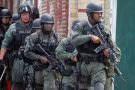
Friday, December 16, 2011

Oath Keepers Receive Tip of National Guard Unit Stand-Down, Refusing to Answer Questionnaire Asking if They Would Use Lethal Force Against the American People

The below tip was posted on the official Oath Keepers Facebook Page by user “Pat Lowe.”  We are in the process of verifying this tip, so it is as of yet unconfirmed, but we wanted you to be aware of it (it certainly would be good news for a change!).  We will post and send out updates as we confirm and verify.

Message on Oath Keepers Facebook Page

Paul Lowe

    I hope you enjoy this great news as I did when I was told.
    Paul Lowe
    OUTSTANDING!! I just left my neighbors house. Devon is with the National Guard for this area. He just got home from a EDRE (emergency deployment readiness exercise) at the armory. He said that during the exercise 3 companies of infantry were polled by questionare about the drill and it’s purpose. One of the questions was, will you as a member of the Nat. Guard use lethal force against the American public if ordered to do so? One of the men stepped forward and refused to take the poll and explained that it was a moral judgement on his part and that he could not do so. He then placed his weapon on the ground and fell in behind the formation. Devon said it was like a waterfall, Every member layed their weapons on the deck and fell in beside the one lone specialist. This included ALL NCO’s, STAFF NCO’s and SENIOR NCO’s. The only people left in front of the original formation was 3 Capt’s. 2 Lt’s and the BN Commander who was so upset he started having chest pains from yelling and screaming about court martials and disbandment of the unit into other units. Devon is a Mstr.Sgt and he went with his troops and told them that he could not be prouder of any of them. He was floating while he was telling me this. Maybe we have more than just hope on our side. SEMPER FI. my thanks for the honor of being here Robert.
    Paul Lowe
    I just heard from Devon. He was TX’d by his Plt LDR and advised that the Specialist Who first layed down his weapon is being held in county jail by the Bn CMDR, awaiting a hearing under the UCMJ. Devon couldn’t get any more info than that. I don’t want to post the mans name until we have more information. I am so upset by this that I am having chest pains. How can they do this to one soldier and not them all. I will let you know how things go. Think I might go lay down for a bit. SEMPER FI.
    Gary Greene
    That is great, sort of, to hear. That the officers wont stand by THEIR oath is troubling. Where is this?

NOTE FROM STEWART RHODES:

Again, this is unconfirmed, and we are working on confirming it.   Please keep that in mind.  But this is certainly the kind of mass, whole-unit stand-down that may well become necessary, especially in light of the treason of the US Senate, which voted 93-7 to authorize military detention and trial of U.S. citizens -- claiming the power to apply the laws of war to the American people in the same way as they are used on a conquered, enemy population, like Iraq or Afghanistan.   While National Guard units can, and have been used for riot control without violating their oath, we suspect that this survey was asking them about whether they would do something far worse than just keep the peace during riots.   We will do our best to get to the bottom of this, and provide all details once confirmed.

If accurate, this is reminiscent of the stand-down during Katrina by SSGT Joshua May’s Utah National Guard Unit, where the whole unit let their commander know, in a peremptory refusal, that they would not participate in any gun confiscation:


UPDATE Dec. 8:

Paul Lowe

I just left both people involved with the incident that took place in the last few days. The soldiers do not want to pursue this matter any further, in any way shape or form. I was advised that the situation is being dealt with inhouse and there will be internal investigations into the conduct of certain ‘officers’ who started the poll and ordered certain persons held. The person allegedly being held was only there for a couple of hours. No punishment will be handed down to any of the soldiers involved. I cannot give any further information as to names dates reasons units or places. This is in respect to my friends here. If this upsets anyone I am sorry but this is the way the soldiers want it. You have my deepest apology and I truly wish I had never spoken about any of this with my friends here on or FB. I will be posting no more information of this type due to the repercussions which could come from this.

Source 


.